

Puerto Vallarta Food Costs vs. USA & Canada: The Complete 2026 Grocery & Dining Price Guide
Real 2026 grocery and restaurant price data — not guesses — comparing Puerto Vallarta and the rest of Mexico to the United States and Canada, plus a monthly food budget planner built for snowbirds, retirees, and travelers.
By PromovisionPV • Puerto Vallarta & Riviera Nayarit Travel Guide • Updated August 2026
Puerto Vallarta Food Costs vs. USA & Canada
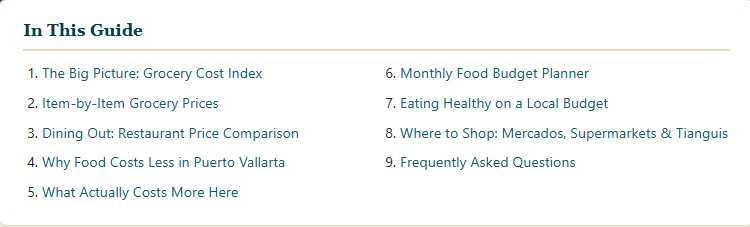


In This Guide
The Big Picture: Grocery Cost Index
Item-by-Item Grocery Prices
Dining Out: Restaurant Price Comparison
Why Food Costs Less in Puerto Vallarta
What Actually Costs More Here
Monthly Food Budget Planner
Eating Healthy on a Local Budget
Where to Shop: Mercados, Supermarkets & Tianguis
Frequently Asked Questions
Every snowbird, retiree, and long-stay traveler asks some version of the same question before booking a flight to Banderas Bay: is food actually cheaper in Puerto Vallarta than back home? The honest answer is yes, meaningfully — but not uniformly, and not the cartoonish “everything costs a dollar” version some blogs still repeat. Below is a grounded, source-backed 2026 comparison of grocery and restaurant prices in Mexico versus the United States and Canada, drawn from Numbeo’s cost-of-living database and cross-checked against real market experience in Puerto Vallarta. If you’re planning a stay in Zona Romántica, Versalles, Nuevo Vallarta, or anywhere along Riviera Nayarit, this is the number-driven breakdown to budget from.
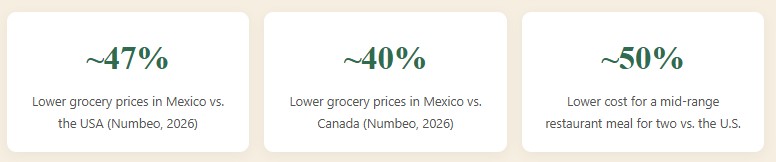
~47% Lower grocery prices in Mexico vs. the USA (Numbeo, 2026)
~40% Lower grocery prices in Mexico vs. Canada (Numbeo, 2026)
~50% Lower cost for a mid-range restaurant meal for two vs. the U.S.

The Big Picture: Grocery Cost Index, Mexico vs. USA vs. Canada
Numbeo scores grocery affordability on a 0-100 index where New York City sits near 100. As of 2026, Mexico’s national grocery index sits far below both its North American neighbors, and that gap holds even in a resort market like Puerto Vallarta, where prices run a little higher than inland Mexican cities but remain well under U.S. and Canadian averages.

Numbeo Grocery Price Index, 2026 (100 = most expensive globally)
Country Grocery Price Index Vs. Mexico
Mexico 38–46 Baseline
Canada 65–71 ~40% higher
United States 72–74 ~47% higher

and 1 CAD = 12.29 MXN Aug 23 2026 Aug 23 2026
Zoomed into Puerto Vallarta specifically, Numbeo’s city-level comparison against a comparable U.S. coastal market — Newport Beach, California — shows groceries running roughly 42.6% higher in the U.S. city, with overall cost of living (rent included) about 72.6% higher. That’s the pattern travelers should expect: Puerto Vallarta is not the cheapest town in Mexico — Guadalajara and inland cities undercut it — but it remains dramatically more affordable than comparable U.S. or Canadian beach towns.

Reality check: Mexico’s food inflation has been running hotter than the general CPI in 2026, with food and non-alcoholic beverages climbing close to 7% year-over-year per INEGI data. The savings gap versus the U.S. and Canada is still wide, but it has narrowed slightly compared to a few years ago — budget with a buffer, not a 2019 mental price list.

and 1 CAD = 12.29 MXN Aug 23 2026
Item-by-Item Grocery Prices: What You will Actually Pay
Index numbers are useful for the big picture, but travelers plan trips around real items in a real cart. Here is a direct Numbeo price comparison between Mexico and Canada for common grocery staples, converted to USD for easy reference. U.S. prices track closely with the Canadian figures for most items, running slightly higher on beef, produce, and prepared foods and slightly lower on dairy in some regions.
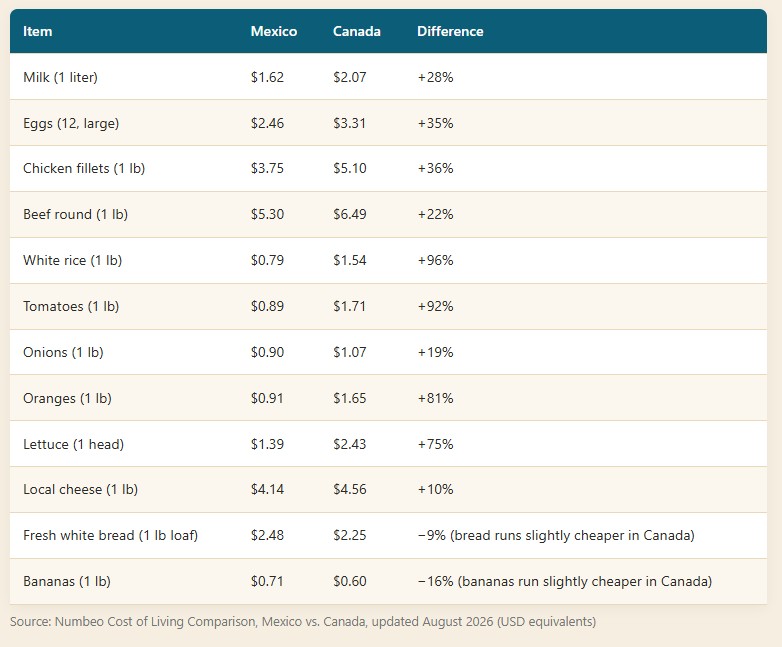
and 1 CAD = 12.29 MXN Aug 23 2026 Aug 23 2026
Source: Numbeo Cost of Living Comparison, Mexico vs. Canada, updated August 2026 (USD equivalents)
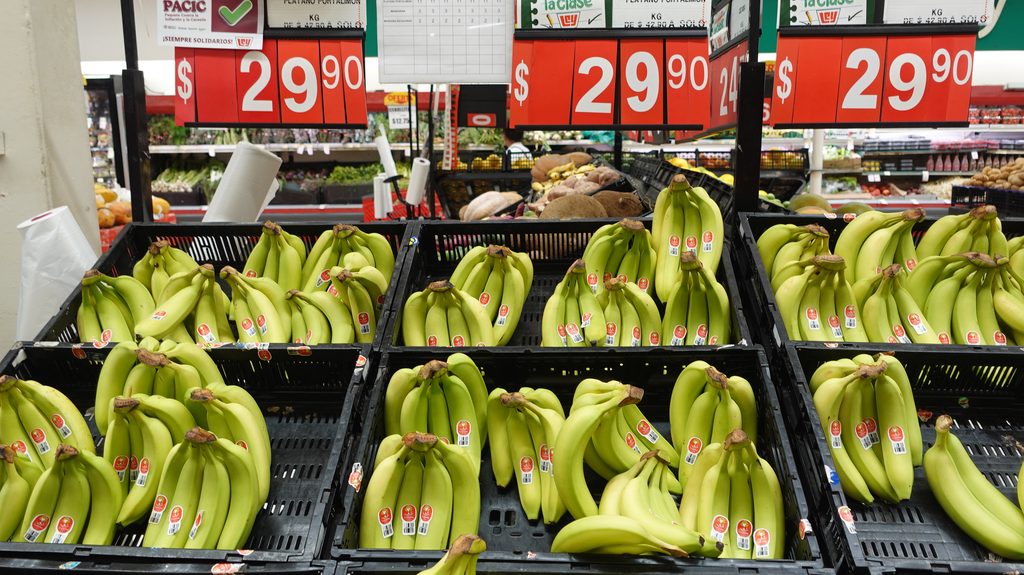
The pattern is consistent: fresh produce, proteins, rice, and dairy run 20-95% cheaper in Mexico, while a small handful of items — bread, bananas — occasionally land cheaper north of the border due to local agricultural subsidies and supply chains. In practice, a traveler cooking mostly Mexican staples (rice, beans, corn tortillas, chicken, seasonal fruit, seafood) will see the deepest savings, while someone insisting on an all-imported pantry will see the gap shrink considerably.
Dining Out: Restaurant Price Comparison
Restaurant savings track even more consistently than groceries, which is part of why Puerto Vallarta has built such a strong reputation as a food destination for North American travelers who can eat out nightly without the U.S. or Canadian bill shock.

Source: Numbeo Cost of Living Comparison, Mexico vs. Canada and U.S. benchmarks, 2026
Restaurant Item Mexico Canada USA (typical)
Inexpensive meal, one person $10.80 $16.60 ~$18–22
Mid-range meal for two, three courses $43.20 $66.40 ~$70–80
Combo meal at a fast-food chain $9.15 $9.95 ~$11–13
Domestic draft beer (pint) $2.70 $5.31 ~$6–8
Cappuccino $3.53 $3.54 ~$4.50–5.50
A mid-range dinner for two in Puerto Vallarta’s Zona Romántica or Marina Vallarta — think fresh ceviche and aguachile, grilled seafood, or a proper mole — regularly comes in near or under half of what the same quality meal costs in a comparable U.S. coastal city, and noticeably less than a Canadian equivalent. Street food and local fondas push the savings even further; see our full breakdown of street food across Banderas Bay.
Why Food Costs Less in Puerto Vallarta
Local growing regions: Jalisco and Nayarit sit inside some of Mexico’s most productive agricultural corridors, so produce, corn, and beans travel short distances from farm to market instead of crossing a border.
Lower labor costs: Restaurant labor, from kitchen staff to servers, costs a fraction of U.S. or Canadian wages, which keeps menu prices down without necessarily lowering food quality.
Local currency pricing: Peso-denominated staples are insulated from the exchange-rate swings that make imported, dollar-priced goods feel volatile.
Direct-to-market channels: Weekly tianguis and neighborhood mercados cut out several layers of distribution that inflate U.S. and Canadian supermarket pricing.
Fresh seafood access: With Banderas Bay’s active fishing fleet, seafood in Puerto Vallarta is often caught the same day, a cost and quality advantage landlocked North American cities simply cannot match.
This is the same logic covered in our guide to eating healthy in Puerto Vallarta: the cheapest ingredients here — avocado, beans, tomatoes, peppers, fresh fish, corn tortillas — also happen to be the most nutrient-dense, which is a rare alignment between budget and health.
What Actually Costs More Here (Be Honest About It)
Any credible cost comparison has to include the exceptions, and there are real ones:
Imported packaged goods: American cereal brands, specialty snacks, and name-brand condiments carry import duties and shipping costs that can push prices above U.S. shelf prices.
Wine and imported spirits: Non-Mexican wine runs comparable to or higher than U.S./Canadian pricing once duties are added; domestic tequila and mezcal remain a bargain by comparison.
Some dairy and specialty cheese: Imported cheeses aimed at the expat market can carry a premium versus a U.S. grocery chain.
Tourist-zone restaurant markups: Malecón-front restaurants and hotel-zone spots price for vacationers; walking two or three blocks inland to where locals eat routinely cuts the bill by 30-50%.
The takeaway: shop and eat like a local — mercados over import aisles, neighborhood fondas over beachfront patios — and the savings compound. Lean heavily on imported, resort-branded convenience, and the gap narrows fast.
Monthly Food Budget Planner for Puerto Vallarta
These figures build directly on our detailed Puerto Vallarta cost of living guide for snowbirds and Mexico cost of living breakdown, narrowed down specifically to food.

Household Groceries (monthly) Dining Out (monthly) Total Food Budget
Single, budget-conscious, cooks most meals $250–350 $100–200 $350–550
Single, comfortable lifestyle $350–450 $250–400 $600–850
Couple, cooks most meals, eats out occasionally $450–600 $200–400 $650–1,000
Couple, comfortable snowbird lifestyle $500–700 $400–800 $900–1,500
Compare that to a typical U.S. or Canadian mid-size city, where a couple eating out regularly can easily spend $1,500-2,500 a month on food alone, and the appeal becomes concrete rather than anecdotal. For the full monthly living cost picture — rent, healthcare, transportation — see the complete Puerto Vallarta cost of living breakdown and our guide to the best neighborhoods for retirees and snowbirds.
Eating Healthy on a Local Budget
One of the most underrated advantages of Puerto Vallarta’s food economy is that healthy and affordable are the same category, not a trade-off. Avocado, beans, chia, pepitas, jicama, and fresh citrus are inexpensive staples, not premium health-food-aisle items. Local seafood-forward dishes like ceviche, aguachile, and grilled fish deliver lean protein at a fraction of U.S. seafood-restaurant pricing. Farmers markets across Banderas Bay — running weekly in Zona Romántica, Bucerías, and elsewhere — put peak-season, peel-and-eat produce directly in reach without a supermarket markup.
For a full nutritional walkthrough, including which dishes to order and which to moderate, see our companion guide: Eat Healthy While in Puerto Vallarta, Mexico. Vegetarians and those managing dietary restrictions can also check our vegetarian restaurant guide.
Where to Shop: Mercados, Supermarkets & Tianguis
Weekly tianguis (street markets): The deepest discounts on produce, meat, and fish — often 20-40% below supermarket prices — rotate through different neighborhoods on different days.
Mercados municipales: Permanent indoor markets for fresh produce, meat, and prepared food at local pricing year-round.
Mainstream chains (La Comer, Soriana, Mega, Walmart): Reliable mid-range pricing, best for packaged goods, cleaning supplies, and consistency.
Costco Puerto Vallarta: A low annual membership fee makes bulk staples, meat, and imported goods worthwhile for longer stays.
For a full walkthrough of where to find each, see our dedicated guide: Shopping for Groceries in Puerto Vallarta.
Frequently Asked Questions
Is food really cheaper in Puerto Vallarta than in the USA? Yes, on average. Numbeo’s 2026 data puts grocery prices in Mexico roughly 40-47% lower than the United States overall, and restaurant meals for two run about half the U.S. price. Locally grown produce, beans, corn, and fresh seafood deliver the biggest savings; imported packaged goods narrow the gap.
How much do groceries cost per month in Puerto Vallarta? A single person shopping mostly at local markets and mainstream supermarkets typically spends $250-450 USD a month on groceries in Puerto Vallarta, while a couple who cooks at home averages $450-700 USD.
Is food cheaper in Mexico than in Canada? Yes. Numbeo’s country-level comparison shows grocery prices in Canada running about 40% higher than in Mexico, and restaurant prices about 36% higher — with an even wider gap once you compare tourist-town Canadian prices to Puerto Vallarta’s local markets and fondas.
What food items actually cost more in Puerto Vallarta? Imported cereals, specialty cheeses, name-brand snacks, wine, and some packaged goods can cost the same or slightly more than in the U.S. or Canada because of shipping and import duties. Locally produced items — tortillas, beans, tropical fruit, seafood, chicken, and beef — remain consistently cheaper.
Where should snowbirds grocery shop in Puerto Vallarta to save the most? Local mercados and weekly tianguis markets typically save 20-40% over supermarket prices for produce, meat, and fish. Mainstream chains like La Comer, Soriana, and Mega deliver reliable mid-range prices, while Costco Puerto Vallarta is worth the low annual membership fee for bulk staples.
See Puerto Vallarta’s Food Scene in Motion
Written prices only tell half the story. Watch real markets, mercados, and restaurant scenes across Puerto Vallarta and Riviera Nayarit on the PromoVision YouTube channel — 220+ videos and counting.
Subscribe on YouTube
Keep Planning Your Puerto Vallarta Budget
Puerto Vallarta Cost of Living for Snowbirds
Puerto Vallarta & Mexico Cost of Living
Eat Healthy While in Puerto Vallarta, Mexico
Mexican Food in Puerto Vallarta
Gastronomic Tourism: Puerto Vallarta & Riviera Nayarit
Best Areas to Live in Puerto Vallarta for Retirees
Vacationing or Retiring to Puerto Vallarta
Data sources: Numbeo Cost of Living Database (2026 mid-year and current rankings), Numbeo city comparison Puerto Vallarta vs. Newport Beach, CA, INEGI/Trading Economics Mexico inflation data, and on-the-ground PromovisionPV market research. Figures are averages and will vary by neighborhood, season, and shopping habits.
PromovisionPV — Travel Blogger, Travel Vlogger, Travel Guide, Travel Tips, Video Productions, Tourism Mexico.
Website • YouTube • Instagram • Facebook • Threads • Bluesky
© PROMOVISION PV