

Cacao: Food of the Gods Born in Mexico. From a sacred Olmec ritual drink to the chocolate bar in your hand trace 3,000 years of cacao history, and discover where to taste, learn, and celebrate it in Puerto Vallarta and Riviera Nayarit.
Every September 2, Mexico marks Día Nacional del Cacao y el Chocolate, National Cacao and Chocolate Day. It is a date chosen on purpose: early September is when the country’s cacao harvest begins, and the celebration exists to honor the thousands of farming families who still grow this ancient crop by hand. Cacao is not just a flavor. It is one of Mexico’s oldest cultural exports, and for travelers, it is still a reason to pack a bag and go exploring.
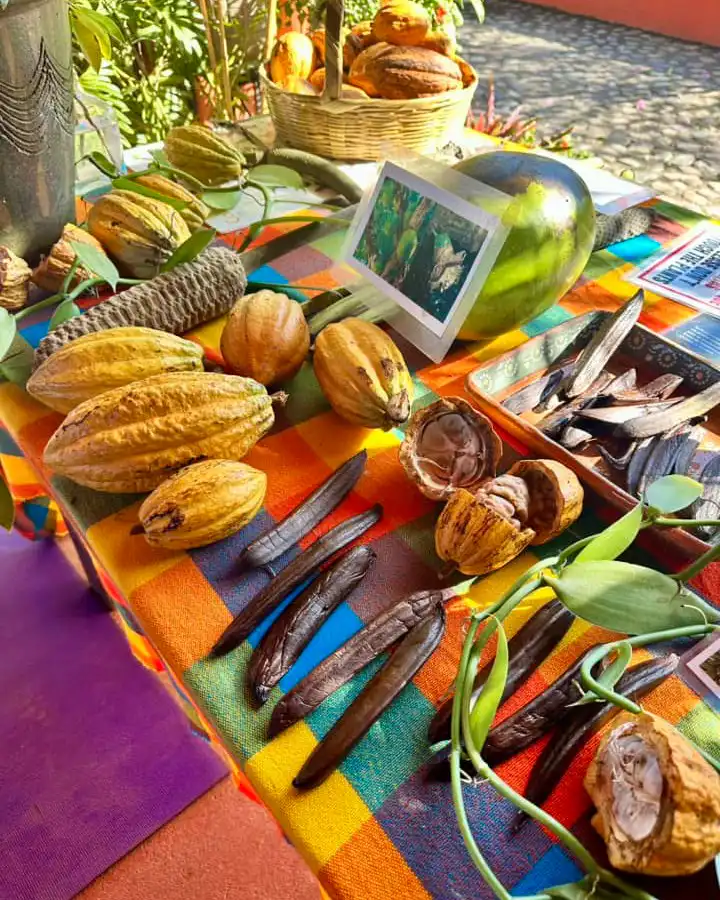
This guide covers where cacao came from, how it evolved from a bitter ceremonial drink into the world’s favorite treat, why Mexico still celebrates it today, and because you are reading this on a Puerto Vallarta travel guide exactly where you can taste, learn about, and take home a piece of that story on the Pacific Coast.
Cacao: Food of the Gods Born in Mexico
Where Cacao Came From
Cacao’s scientific name, Theobroma cacao, literally translates from Greek as “food of the gods.” The tree is native to the tropical lowlands of Mesoamerica and the upper Amazon basin, and archaeological evidence places its earliest cultivation and ceremonial use in what is today southern Mexico. The Olmec civilization, flourishing along the Gulf Coast around 1500–400 BC, is widely credited as the first culture to crush cacao beans, mix them with water, and season the resulting drink with chile, herbs, and spices.
That first cup of “chocolate” bore almost no resemblance to what fills a modern candy bar. It was bitter, frothy, and spiced — closer to a savory tonic than a dessert. But it carried enormous weight. The Maya considered the cacao tree the “tree of the gods,” and among the Aztecs, cacao beans were prized highly enough to be used as currency, alongside their role in royal and religious ceremony.

Did you know? Cacao beans were once literally money. Aztec markets priced goods in cacao beans, and counterfeiters were known to hollow out beans and refill them with mud — history’s earliest recorded chocolate fraud.
A Timeline of Cacao’s Evolution
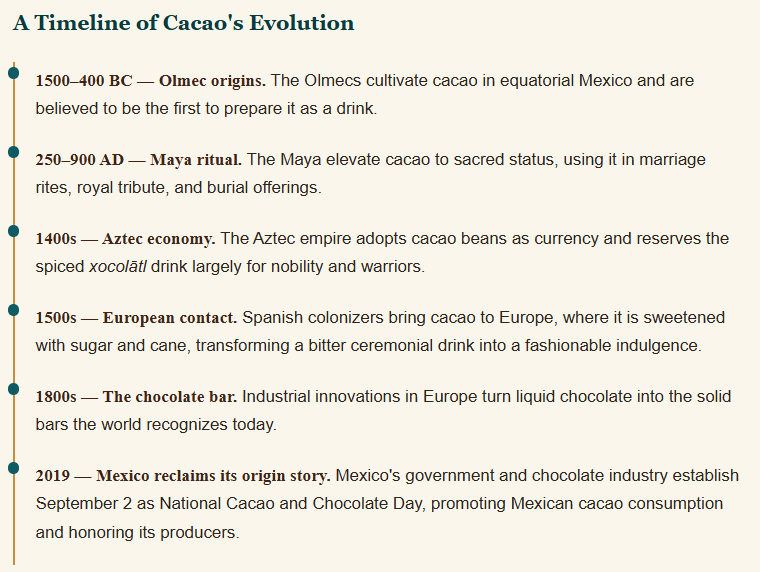
1500–400 BC — Olmec origins. The Olmecs cultivate cacao in equatorial Mexico and are believed to be the first to prepare it as a drink.
250–900 AD — Maya ritual. The Maya elevate cacao to sacred status, using it in marriage rites, royal tribute, and burial offerings.
1400s — Aztec economy. The Aztec empire adopts cacao beans as currency and reserves the spiced xocolātl drink largely for nobility and warriors.
1500s — European contact. Spanish colonizers bring cacao to Europe, where it is sweetened with sugar and cane, transforming a bitter ceremonial drink into a fashionable indulgence.
1800s — The chocolate bar. Industrial innovations in Europe turn liquid chocolate into the solid bars the world recognizes today.
2019 — Mexico reclaims its origin story. Mexico’s government and chocolate industry establish September 2 as
National Cacao and Chocolate Day, promoting Mexican cacao consumption and honoring its producers.
National Cacao and Chocolate Day: Why It Matters
Cacao, the food of the gods, originated in Mexico and continues to give people a reason to travel and discover the flavors of the country. National Cacao and Chocolate Day was created in 2019 to reconnect modern Mexico with that legacy, to promote the consumption of Mexican cacao, and to spotlight the growers who keep the tradition alive.
Mexico produces roughly 29,000 tons of cacao every year, the result of the work of thousands of farming families, concentrated overwhelmingly in the southeastern states of Tabasco and Chiapas, with smaller but historically rich production in Veracruz, Guerrero, and Oaxaca:
Tabasco is home to the Cacao Route, where visitors tour working plantations, sample artisanal chocolate, and learn about the legacy the Olmecs left the world.
Chiapas grows cacao amid rainforest, where it remains woven into daily life and traditional celebration rather than treated as a commodity crop.
Veracruz, a fertile land rich in history, still relies on cacao to drive local economies and pass down generational tradition.
Despite being cacao’s birthplace, Mexico today ranks outside the world’s top ten cacao-producing nations — a gap that makes celebrations like National Cacao Day less about nostalgia and more about active cultural preservation. More than a flavor, cacao and chocolate represent culture, biodiversity, and community-based tourism: every plantation visit is an encounter with producers who proudly share the history of this pre-Hispanic treasure.
Cacao Culture on the Pacific Coast: Puerto Vallarta & Riviera Nayarit
You do not have to fly to Tabasco to experience cacao culture. Puerto Vallarta and Riviera Nayarit have built their own calendar of cacao-focused events and hands-on experiences that let travelers connect with this “sacred seed of Mexico” without leaving Banderas Bay.
Cacao: Food of the Gods Born in Mexico
1- Puerto Vallarta Cacao and Chocolate Festival
Held each April in downtown Puerto Vallarta, the Puerto Vallarta Cacao and Chocolate Festival gathers conferences on the history and cultural significance of cacao, hands-on workshops in cacao-based product preparation, and wisdom-sharing sessions with Maya tradition elders. A market of chocolate products and handcrafted goods from local producers rounds out the event, all built around the festival’s mission of cultural preservation, fair trade, and sustainable cacao economies.
2- The Cocoa Festival — Puerto Vallarta & Yelapa
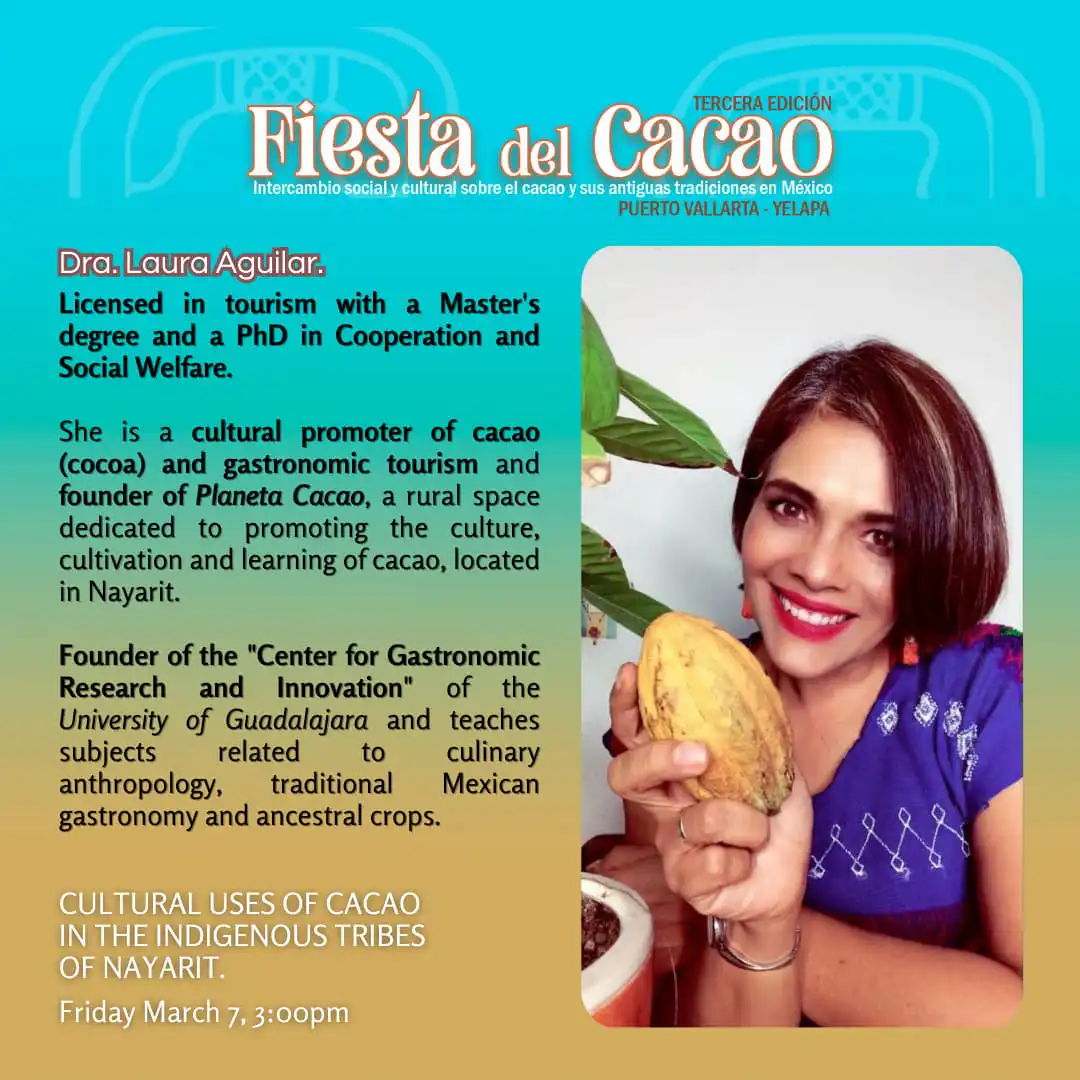
This multi-day celebration splits its program between Puerto Vallarta and the jungle-and-beach village of Yelapa, combining conferences on cacao’s cultural and spiritual history with practical workshops on ancestral cultivation and cacao-derived product techniques. Read more in the Cocoa Festival Puerto Vallarta and Yelapa guide.
3- Cacao, Chocolate, Coffee & Vanilla Festival — Vallarta Botanical Garden
The Vallarta Botanical Garden, one of Mexico’s leading botanical institutions, hosts an annual festival celebrating three of Mexico’s most iconic native crops cacao, coffee, and vanilla with live music, family activities, a local producers’ expo, and expert lectures. You can see a real cacao tree growing on the property year-round. Full details are in the Festival of Cacao and Vanilla guide and the garden’s complete Vallarta Botanical Garden travel guide.
4- Gourmet Chocolate-Making Class, Marina Vallarta
For a year-round, book-anytime experience, the chocolate-making studio at the Marina Vallarta terminal lets visitors of every age turn real Mexican cacao into finished chocolate using Belgian technique. It’s a hands-on way to understand quite literally — how a bean becomes a bar, and a memorable family activity for any time of year you visit.
Plan Your Cacao Experience in Puerto Vallarta
Watch the region’s festivals, plantations, and chocolate workshops come to life on video before you go.
Watch on YouTube: @promovision
Cacao Experiences Compared
Experience When Location Best For
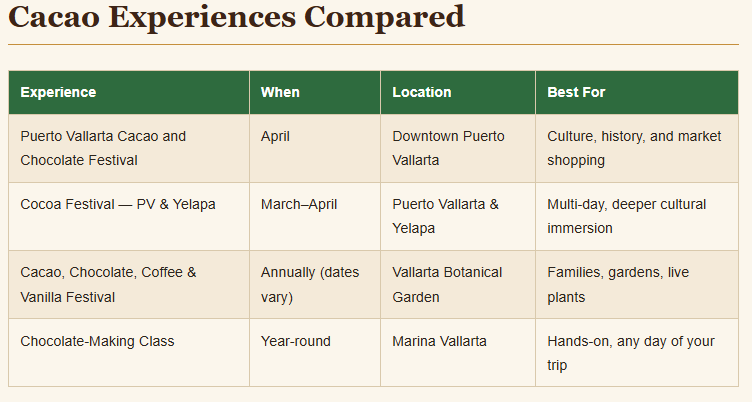
Puerto Vallarta Cacao and Chocolate Festival April Downtown Puerto Vallarta Culture, history, and market shopping
Cocoa Festival — PV & Yelapa March–April Puerto Vallarta & Yelapa Multi-day, deeper cultural immersion
Cacao, Chocolate, Coffee & Vanilla Festival Annually (dates vary) Vallarta Botanical Garden Families, gardens, live plants
Chocolate-Making Class Year-round Marina Vallarta Hands-on, any day of your trip
From Bean to Bar: How Cacao Becomes Chocolate
Understanding the process makes every tasting more meaningful:
Harvest. Ripe cacao pods are cut by hand from the trunk and branches of the Theobroma cacao tree.
Fermentation. Beans and pulp ferment for several days, developing the flavor compounds that eventually read as “chocolate.”
Drying. Fermented beans dry in the sun, reducing moisture and locking in flavor.
Roasting. Dried beans are roasted, deepening aroma and loosening the shell from the nib.
Grinding. Roasted nibs are ground into cacao paste, or “liquor” — pure, unsweetened chocolate in liquid form.
Refining and molding. Sugar, milk, or spices are blended in before the mixture is tempered and molded into its final form — bar, drink, or mole ingredient.
Mexican cuisine still honors cacao’s savory, ceremonial roots as much as its sweet modern identity: cacao appears not only in chocolate bars and hot drinks, but in mole sauces and traditional recipes passed down through generations. For a deeper dive into how cacao fits into the country’s broader culinary identity, see our Ultimate Mexican Food Guide for Puerto Vallarta and Mexican Cuisine: Famous Worldwide.
Frequently Asked Questions
When is National Cacao and Chocolate Day? September 2 every year. The date was chosen because it coincides with the start of Mexico’s cacao harvest and was formally established in 2019 to promote Mexican cacao consumption and honor its producers.
Where did cacao originate? In the tropical lowlands of Mesoamerica and the upper Amazon. The Olmec civilization in what is now southern Mexico is credited as among the earliest cultures to cultivate and consume cacao, more than 3,000 years ago, later carried forward by the Maya and Aztec peoples.
Is there cacao culture in Puerto Vallarta or Riviera Nayarit? Yes. While Mexico’s major cacao-growing regions are Tabasco and Chiapas, Puerto Vallarta and Riviera Nayarit celebrate cacao through the Puerto Vallarta Cacao and Chocolate Festival, the Cocoa Festival in Yelapa, the Vallarta Botanical Garden’s Cacao and Vanilla Festival, and a year-round chocolate-making class at the Marina Vallarta terminal.
How much cacao does Mexico produce each year? Around 29,000 tons annually, grown mainly in Tabasco and Chiapas, with additional production in Veracruz, Guerrero, and Oaxaca.
What is the difference between cacao and chocolate? Cacao is the raw bean and its minimally processed forms, like nibs and paste. Chocolate is the finished product made by roasting, grinding, and blending cacao with sugar, milk, or other ingredients.
Can I take a chocolate-making class in Puerto Vallarta? Yes — a gourmet chocolate-making studio at the Marina Vallarta terminal uses real Mexican cacao and Belgian technique, and welcomes visitors of all ages for a hands-on, bean-to-bar experience.
Cacao: Food of the Gods Born in Mexico
Keep Exploring Puerto Vallarta & Riviera Nayarit
Puerto Vallarta Ultimate Travel Guide 2026
Riviera Nayarit Travel Guide & Itinerary
Gastronomic Travel Guide: Puerto Vallarta
Things to Do in Puerto Vallarta, 2026–27
Vallarta Botanical Garden Travel Guide
Learn More From Official Sources
Secretaría de Agricultura y Desarrollo Rural (SADER) — Mexico’s agriculture ministry, tracking national cacao production data.
International Cocoa Organization (ICCO) — global cacao production and trade statistics.
VisitMexico — Mexico’s official national tourism board.
See More of Mexico’s Food Culture in Motion
PromovisionPV has covered 420+ Puerto Vallarta & Riviera Nayarit stories on video — from cacao festivals to street food tours.
Explore the Full Travel Guide → https://promovisionpv.com/
Written for PromovisionPV — Travel Blogger, Travel Vlogger, Travel Guide, Video Productions, Tourism Mexico. Follow along on Facebook, and YouTube.