

Puerto Vallarta & Riviera Nayarit · Canadian Snowbird & Retirement Guide. Should Canadians Retire or Move to Puerto Vallarta? The Pros and Cons Repeat Vacationers Actually Weigh.
Every winter, thousands of Canadians land in Puerto Vallarta as tourists and go home dreaming about staying. This guide breaks down the honest advantages and drawbacks of turning a Puerto Vallarta or Riviera Nayarit vacation into a second home or full retirement — climate, cost of living, healthcare, safety, visas, community and everything in between.
Canadian Snowbird & Retirement Guide
Updated August 2026
By Promovision Travel Guide
18 min read
Puerto Vallarta · Bucerias · Nuevo Nayarit
If you are a Canadian who has been to Puerto Vallarta more than once, you already know the feeling. You land at Licenciado Gustavo Díaz Ordaz International Airport, step off the plane into warm air that does not bite, and within a day or two you are asking your travel companion the same question thousands of Canadians ask every winter: could we actually live here? A growing number of repeat vacationers are turning that question into a real plan, whether that means a two-month snowbird stay, a second home purchase, or a full retirement relocation to Puerto Vallarta or Riviera Nayarit, Mexico.
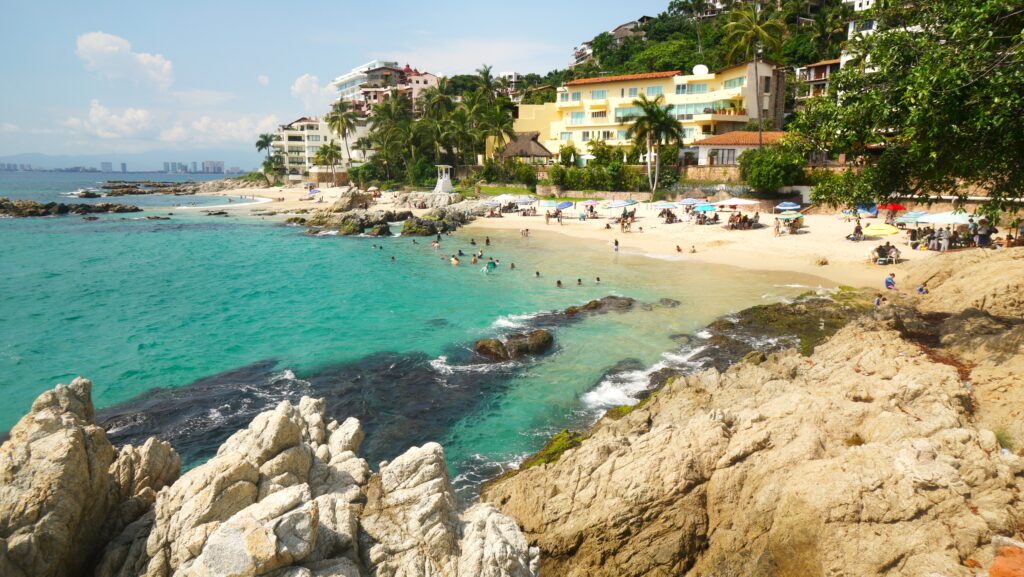
This is not a glossy sales pitch. It is a grounded look at what Canadians actually weigh before making the leap — the genuine pros of Puerto Vallarta life, the real cons nobody puts in the brochure, and the practical questions around healthcare, safety, cost of living and community that come up again and again in Puerto Vallarta and Nayarit Facebook groups and expat forums.

Who this guide is for: Canadian travelers who have visited Puerto Vallarta or Riviera Nayarit two or more times, and are now seriously exploring a longer stay, a second home purchase, or full-time retirement in Mexico’s Banderas Bay region.
What’s in this guide

Why Canadians keep coming back to Puerto Vallarta
The Pros: what draws repeat vacationers to stay
The Cons: what nobody tells you before you move
Vacationing vs. retiring: a side-by-side comparison
Healthcare and health insurance for Canadian expats
The second-home and real estate trend
Finding your community before you move
Puerto Vallarta vs. Riviera Nayarit: where should you settle?
Frequently asked questions
Why Canadians keep coming back to Puerto Vallarta
Puerto Vallarta has become one of the most searched Mexican destinations among Canadian travelers, and the numbers back it up. Flight searches from Canada to Puerto Vallarta jump every December as the first snow hits, with direct routes now running from more than a dozen Canadian cities. Airlines like Air Canada, WestJet and Air Transat have expanded seasonal and year-round service precisely because Canadian demand keeps growing, not just for one-off vacations but for repeat, multi-week and multi-month stays.
What starts as an escape from a Canadian winter often evolves. Travelers keep returning to Puerto Vallarta year after year because the destination delivers a rare combination: a walkable, culturally rich city center in the Zona Romántica, a dependable dry season from roughly November through May, genuinely warm hospitality, and a cost of living that stretches a Canadian pension or retirement savings considerably further than it would at home. For many, the fourth or fifth visit is when the question shifts from “where should we vacation next winter” to “should we just stay.”
“The first trip is a vacation. The third trip is research. The fifth trip, you’re already mentally decorating a condo.”
The Pros: What draws repeat vacationers to stay.

Ask any long-time Canadian expat in Puerto Vallarta or Bucerias why they made the move, and a handful of reasons come up consistently. Here is the honest case for Puerto Vallarta and Riviera Nayarit as a retirement or second-home destination.
🌞 Climate you can plan your life around
Predictable dry season: Roughly seven months of sunshine, low humidity and mild evenings, ideal for escaping Canadian winters entirely.
Warmer than the Caribbean coast in shoulder months and shielded from the worst hurricane exposure by Banderas Bay’s geography.
💰 A cost of living Canadian pensions can handle
Groceries, dining out, domestic help and transportation typically cost a fraction of equivalent Canadian city prices.
Routine doctor visits average well under half the cost of comparable care in the U.S., and are consistently more affordable than private care in Canada.
🏥 Genuinely good, affordable healthcare
Puerto Vallarta has private hospitals and English-speaking specialists used to treating Canadian and American patients.
Healthcare costs run at least 50% lower than equivalent private care in Canada or the U.S., making both routine and elective care accessible.
🛡️ Reputation as one of Mexico’s safer cities
Puerto Vallarta is regularly cited as one of the safest tourist and expat cities in Mexico, with an active tourism police presence in visitor-heavy zones.
A long-established, visible expat and Canadian community adds an extra layer of shared local knowledge and support.
✈️ Easy, direct travel home
Direct flights from 16-plus Canadian cities mean grandkids, medical appointments and holidays back home are a straightforward, non-stop trip away.
Flight times of four to six hours from most Canadian gateways keep the destination genuinely accessible, not remote.
🤝 A ready-made community
Active Puerto Vallarta and Riviera Nayarit Facebook groups connect newcomers with everything from real estate advice to doctor recommendations before they even land.
Well-established Canadian snowbird circles in the Romantic Zone, Nuevo Nayarit, Bucerias and Punta Mita make the first year far less isolating than starting from scratch.
The Cons: What nobody tells you before you move
None of this means the decision is simple. Canadians who have gone through the process — and those who tried it and moved back — are consistently candid about the trade-offs. A fair pros-and-cons conversation has to include these.
📄 Residency paperwork and bureaucracy
Temporary and permanent resident visas require documentation, income or savings thresholds, and appointments at a Mexican consulate before arrival — this is not a walk-in process.
Local bureaucracy (utilities, banking, vehicle importation) moves at a different pace than in Canada and often requires patience and, ideally, some Spanish or a bilingual facilitator.
🗣️ The language barrier is real, once you’re off the tourist strip
English is widely spoken in hotels, restaurants and real estate offices, but far less so at the pharmacy, the utility office, or in emergency medical situations outside the main tourist corridor.
Full integration, especially outside expat-heavy neighborhoods, benefits significantly from ongoing Spanish study.
🏥 Healthcare requires you to plan for it yourself
Canadian provincial health coverage such as OHIP or MSP generally does not travel with you and rarely covers non-emergency care abroad.
Expats must independently arrange either Mexico’s public IMSS system or a private international policy, and pre-existing conditions can limit or exclude coverage.
👨👩👧 Distance from family and support networks
Even with direct flights, being thousands of kilometers from adult children, grandchildren and long-time friends is an emotional cost that surprises many first-time retirees abroad.
Aging in place away from Canada’s healthcare and social support systems requires a realistic long-term care plan, not just a retirement-age one.
🌦️ Summers are hot, humid and quiet
June through October brings high heat, humidity and the rainy season; many snowbirds who love the winter find the summer months genuinely difficult to adjust to.
Tourist-dependent businesses and social calendars slow considerably in the off-season, which can feel isolating for full-time residents.
🚗 Infrastructure, driving and financial logistics
Road conditions, driving norms and mandatory Mexican vehicle insurance differ significantly from Canada and take adjustment.
Currency exchange exposure, cross-border banking and Canadian tax residency rules require professional advice before a move, not after.
Not sure if you’re a “vacationer” or “future expat”?
Subscribe to the Promovision YouTube channel for real, on-the-ground video coverage of Puerto Vallarta and Riviera Nayarit neighborhoods, real estate, healthcare and expat life — 220+ videos and counting.
Watch on YouTube
Vacationing vs. retiring: a side-by-side comparison
A two-week vacation and a permanent move test completely different things. Use this comparison to see what actually changes once the return flight is no longer booked.
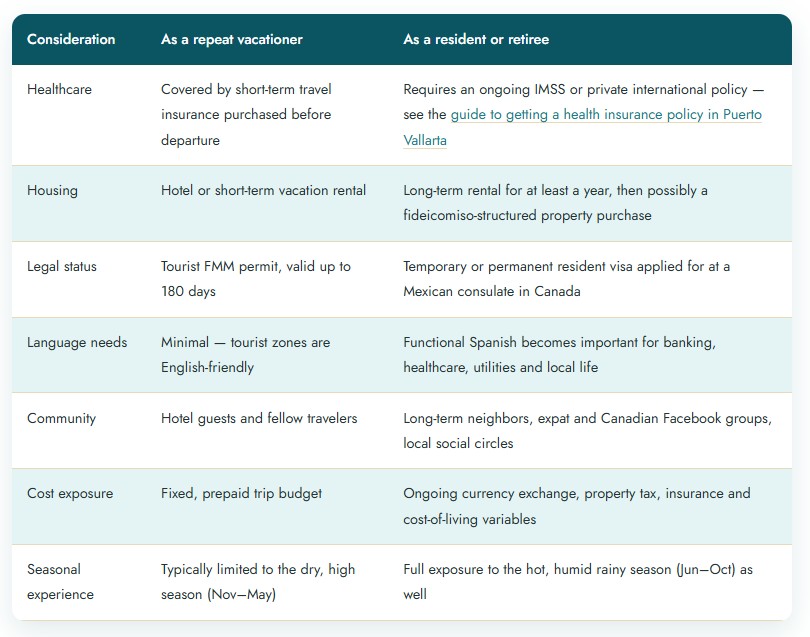
Consideration As a repeat vacationer As a resident or retiree
Healthcare Covered by short-term travel insurance purchased before departure Requires an ongoing IMSS or private international policy — see the guide to getting a health insurance policy in Puerto Vallarta
Housing Hotel or short-term vacation rental Long-term rental for at least a year, then possibly a fideicomiso-structured property purchase
Legal status Tourist FMM permit, valid up to 180 days Temporary or permanent resident visa applied for at a Mexican consulate in Canada
Language needs Minimal — tourist zones are English-friendly Functional Spanish becomes important for banking, healthcare, utilities and local life
Community Hotel guests and fellow travelers Long-term neighbors, expat and Canadian Facebook groups, local social circles
Cost exposure Fixed, prepaid trip budget Ongoing currency exchange, property tax, insurance and cost-of-living variables
Seasonal experience Typically limited to the dry, high season (Nov–May) Full exposure to the hot, humid rainy season (Jun–Oct) as well
Healthcare and health insurance for Canadian expats
Healthcare is consistently the single most important factor Canadians research before retiring to Puerto Vallarta, and for good reason: provincial health coverage from home does not follow you across the border. Understanding what health insurance for foreigners and expats in Mexico actually covers is essential homework before you relocate, not after.
In practical terms, expats choose between two paths. The first is Mexico’s public system through IMSS (Instituto Mexicano del Seguro Social), which is affordable but comes with longer wait times and is generally better suited as a baseline safety net than a primary plan. The second is private international health insurance, tailored to expats and accounting for age, pre-existing conditions and desired coverage limits — average private premiums run around 38,000 MXN (roughly 1,700 USD) per year, though costs scale with age and coverage level. Either way, taking the time to actually get a health insurance policy in Puerto Vallarta set up before your permanent move, ideally through a licensed local broker, removes one of the biggest sources of anxiety new residents describe.
The upside is real: Puerto Vallarta’s private hospitals and clinics are staffed by English-speaking, internationally trained doctors, routine visits often cost a fraction of Canadian private-pay rates, and the city has become a recognized medical tourism destination in its own right for dental work, elective procedures and diagnostics like MRIs, which can cost roughly a third of U.S. pricing.

The second-home and real estate trend
One of the clearest signals that repeat Canadian vacationers are serious about Puerto Vallarta is the surge in second-home buying. The Puerto Vallarta second-home trend for 2026 reflects a broader pattern: buyers who vacationed for years, tested a long-term rental, and eventually purchased through Mexico’s fideicomiso (bank trust) structure, which allows foreigners to hold property rights in the restricted coastal zone.
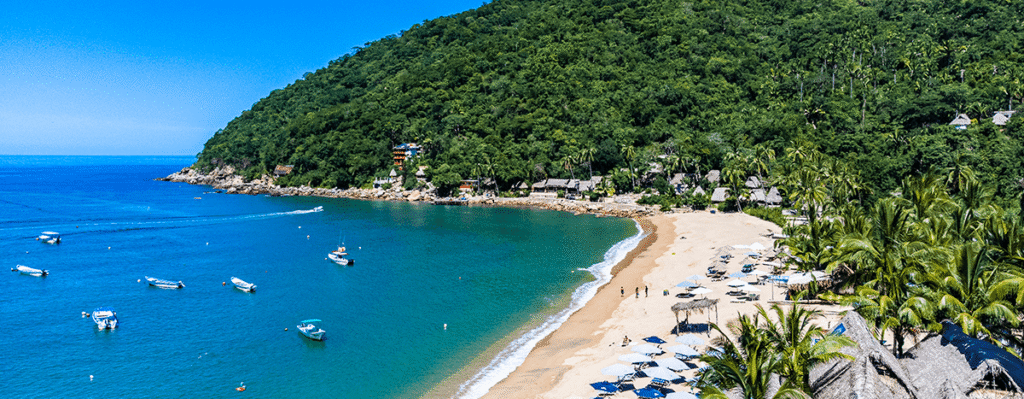
Most experienced relocation advisors and long-time expats give the same advice: rent before you buy, and rent through a full calendar year including the summer rainy season, before committing to a purchase. A neighborhood that feels perfect in January can feel very different in August. This is also where location matters enormously — Puerto Vallarta’s Zona Romántica offers walkability and nightlife, while towns along Bucerias and the Riviera Nayarit coastline tend to offer a quieter, more residential pace that many full-time retirees ultimately prefer over the busier tourist core.
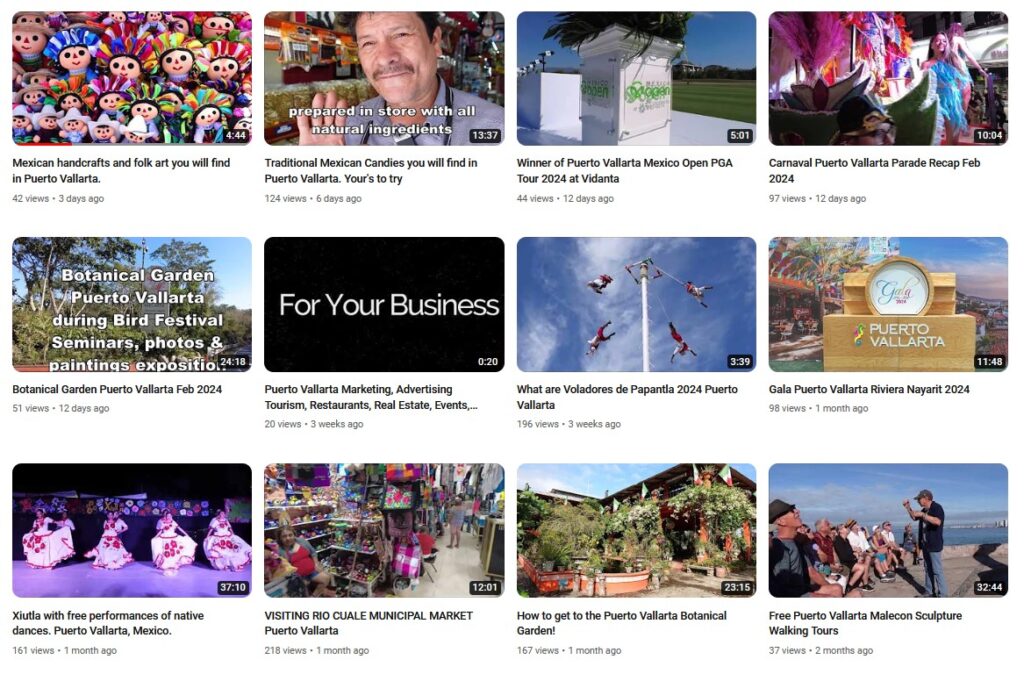
Promovision YouTube Channel Puerto Vallarta Riviera Nayarit
See the neighborhoods before you decide. The Promovision YouTube channel has narrated video tours of the Zona Romántica, Nuevo Nayarit, Bucerias, Punta Mita, Sayulita and San Pancho — real footage, not stock photos.
Watch the video guides → https://www.youtube.com/@promovision/videos
Finding your community before you move
The single biggest predictor of whether a Canadian retiree thrives or struggles in Puerto Vallarta is not budget or Spanish fluency — it’s community. Long before arrival, joining the right Puerto Vallarta and Nayarit Facebook groups gives future residents a direct line to people who have already made the move: real answers about which clinics to trust, which neighborhoods actually feel safe at night, where to find Canadian goods, and which movers or immigration lawyers are worth hiring.
These groups also do double duty as an early-warning system for the realities of expat life — the good and the frustrating — which is far more useful than polished marketing content when you’re trying to decide if this move is genuinely right for you.
Puerto Vallarta vs. Riviera Nayarit: where should you settle?
Not every Canadian retiree wants the same version of Puerto Vallarta. The Zona Romántica and Marina areas suit those who want walkability, restaurants, nightlife and a dense expat social scene. Riviera Nayarit — including Bucerias, Nuevo Nayarit, Punta Mita, Sayulita and San Pancho — tends to appeal to retirees looking for a quieter, more residential, beach-town pace just a short drive north across the Jalisco-Nayarit border, often at a lower cost of entry for real estate than comparable Puerto Vallarta beachfront.
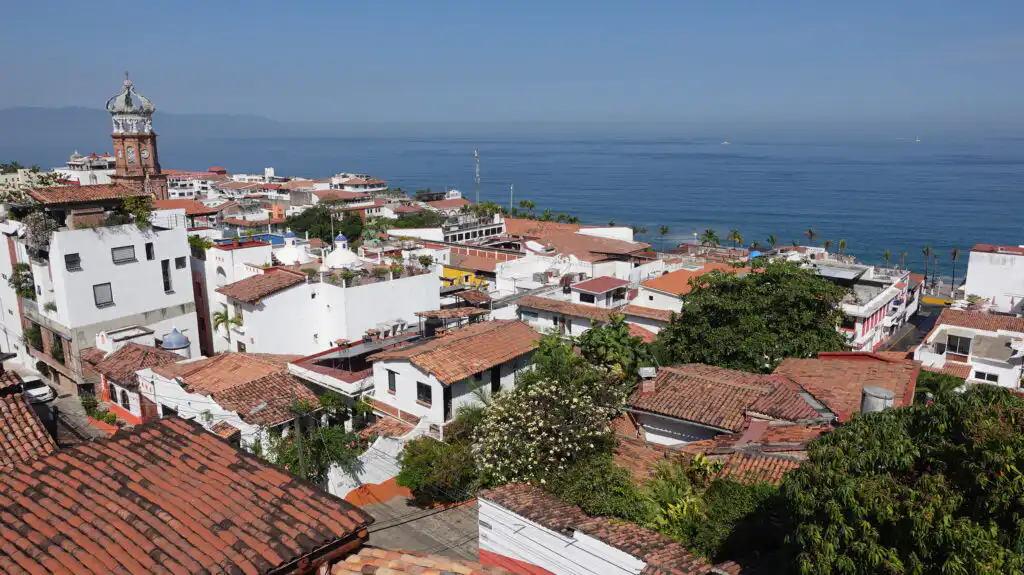
There is no universally correct answer here — it comes down to whether you are moving toward an active, urban-adjacent lifestyle or a slower, small-town coastal one, and testing both through extended stays before deciding is consistently the advice given by those who have already made the move.
Frequently asked questions
Is it a good idea for Canadians to retire in Puerto Vallarta?For many Canadians, yes. Puerto Vallarta offers a warm year-round climate, a lower cost of living than most Canadian cities, direct flights from over a dozen Canadian airports, quality private healthcare at a fraction of Canadian or US prices, and an established, welcoming expat and Canadian snowbird community. It suits retirees who prioritize climate, affordability and lifestyle over staying close to family, and who are comfortable navigating a different language, bureaucracy and healthcare system.
What are the biggest downsides of moving to Puerto Vallarta from Canada? The most common cons Canadians cite are the language barrier outside tourist areas, the learning curve of Mexican residency paperwork and bureaucracy, distance from adult children and grandchildren, hot and humid summers, driving conditions and vehicle insurance requirements, the need to privately arrange health insurance since Canadian provincial healthcare does not follow you abroad, and the adjustment to a slower, less predictable pace of local services and infrastructure.
Do Canadians need health insurance to live in Puerto Vallarta? Yes. Provincial health plans like OHIP or MSP generally do not cover routine care outside Canada, and most only reimburse a small portion of emergency costs abroad, if any. Expats living in Puerto Vallarta typically choose between Mexico’s public IMSS system or a private international health insurance policy, with private plans averaging roughly 38,000 MXN (about 1,700 USD) a year, though costs vary by age, coverage level and pre-existing conditions.
How much does it cost to live in Puerto Vallarta compared to Canada? Day-to-day costs in Puerto Vallarta and Riviera Nayarit are generally significantly lower than in most Canadian cities, particularly for dining out, groceries, domestic help, and medical and dental care, where routine doctor visits can run under 40 USD compared to roughly 176 USD in the United States. Housing costs vary widely by neighborhood, from budget-friendly inland areas to premium beachfront pricing in the Romantic Zone, Nuevo Nayarit or Punta Mita.
Is Puerto Vallarta safe for retirees and snowbirds? Puerto Vallarta is consistently ranked among Mexico’s safest tourist and expat destinations, and has been recognized as one of the safest cities in the country. As with any destination, common-sense precautions apply, and most residents recommend sticking to well-established neighborhoods, staying aware of surroundings, and connecting with the local expat community for up-to-date safety information.
Should I rent or buy if I’m testing out life in Puerto Vallarta? Most relocation advisors and long-time expats recommend renting for at least one full year, including through the hot summer rainy season, before buying property. This allows repeat vacationers to experience a neighborhood in every season, compare areas like the Romantic Zone, Nuevo Nayarit and Bucerias, and confirm the lifestyle fits before committing to Mexico’s fideicomiso property structure for foreign buyers near the coast.
Helpful next reads and outside resources
Why Retire in Puerto Vallarta, Mexico — a closer look at Mexico’s ranking among top retirement destinations for Canadians
Why Travelers Are Returning to Puerto Vallarta — the pull factors bringing repeat visitors back every year
Puerto Vallarta Second Home Trend 2026 — what’s driving the current wave of foreign buyers
How to Get a Health Insurance Policy in Puerto Vallarta — practical steps before you relocate
Bucerias, Riviera Nayarit: Destination Guide — a quieter alternative just north of Puerto Vallarta
Puerto Vallarta & Nayarit Facebook Groups — connect with the community before you land
Mexico’s Secretaría de Relaciones Exteriores — official visa and residency requirements
Government of Canada travel advisory for Mexico — official safety and entry information for Canadians
Riviera Nayarit Convention and Visitors Bureau — official destination resources
Asociación Mexicana de Instituciones de Seguros (AMIS) — Mexico’s national insurance association
Written by the Promovision team — travel bloggers, vloggers and video producers based in Puerto Vallarta with 25+ years of on-the-ground experience across Jalisco and Riviera Nayarit. Explore the full Puerto Vallarta & Riviera Nayarit travel guide or subscribe on YouTube.

Promovision — Travel Blogger, Travel Vlogger, Travel Guide, Travel Tips & Video Production, Puerto Vallarta & Riviera Nayarit.
promovisionpv.com · YouTube · Instagram · Facebook